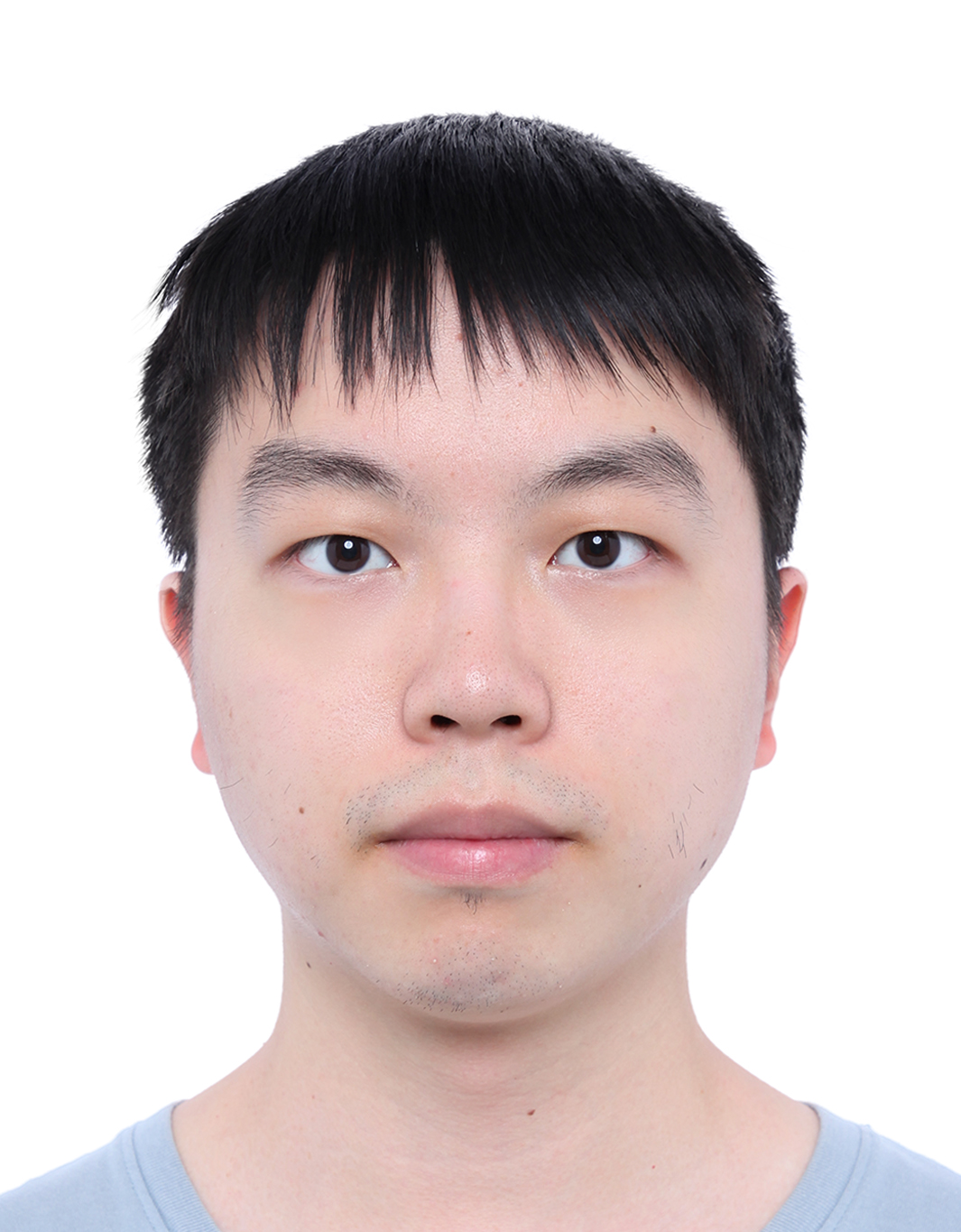
Hi there! 👋
I’m Kechi Zhang (张克驰).
I am currently with the Tencent Hunyuan LLM Team, where I study agents. My work explores challenging problems in agent–model co-design.
I received my Ph.D. in Computer Science from Peking University in June 2026. My research focuses on AI for Software Engineering (AI4SE), LLMs for Code, and Code Agent Systems.
During my Ph.D., two of my first-authored papers received the ACM SIGSOFT Distinguished Paper Award. These were, without a doubt, among the happiest and most memorable moments of my Ph.D. journey. : )
I was honored to be named an Outstanding Graduate of both Beijing and Peking University. My doctoral dissertation, Research on Key Technologies of Code Agent Systems Based on Large Language Models, received the 2026 Peking University Outstanding Doctoral Dissertation Award—the university’s highest distinction for a doctoral dissertation. Only four dissertations from the School of Computer Science received this honor that year.
I am passionate about building powerful and reliable agents that can tackle complex, real-world tasks and ultimately transform how software is developed. I am always happy to connect with researchers and builders working on related topics!
Email: zhangkechi@pku.edu.cn
Homepage: Google Scholar
🔍 Research Focus
- AI4SE & LLMs for Code
- Code Generation and Representation through Deep Learning
- Reinforcement Learning for Long Reasoning Code Models
- Pre-training, fine-tuning, and alignment of Code LLMs
- Tool Enhancement and Agent Technology for Code Models
- Length Extrapolation for Code Models
- Project-level Code Generation
- Structural Information-based Code Representation Models
📚 Education
-
Ph.D. in Computer Software and Theory
School of Computer Science, Peking University, Beijing, China
Sept. 2021 - June 2026
Tutor: Prof. Zhi Jin, Prof. Ge Li -
B.S. in Computer Science and Technology
School of EECS, Peking University, Beijing, China
Sept. 2017 - July 2021
GPA: ~3.60 (Top 25%)
📝 Selected Publications (First Author)
-
SEAlign | ICSE 2026 (CCF-A) | 🏆ACM SIGSOFT Distinguished Paper Award A novel alignment framework aimed at bridging the gap between code generation models and real-world software engineering agent.
-
StackTrans | NeurIPS 2025 (CCF-A) StackTrans is an improved model based on the Transformer architecture, which addresses the performance bottleneck of traditional Transformers in processing context-free grammars (such as regular expressions and deterministic context-free grammars) by introducing a hidden state stack mechanism.
-
CodeDPO | ACL 2025 Main Conference (CCF-A) A preference optimization framework for code models that focuses on both correctness and efficiency without depending on external resources.
-
FocusedDPO | ACL 2025 Finding (CCF-A) Fine-graind optimization for code models with Error-Prone Points Identification.
-
CodeAgent | ACL 2024 Main Conference (CCF-A) Integrating multiple programming assistance tools into large models for practical problem-solving.
-
HiRoPE | ACL 2024 Main Conference (CCF-A) Introducing a plug-and-play length extension method for large code models.
-
Self-Edit | ACL 2023 Main Conference (CCF-A) Early exploration into the self-repair capability of large models in code generation.
-
Hierarchy Transformer | ICPC 2023 & EMSE 2024 | 🏆ACM SIGSOFT Distinguished Paper Award (CCF-B) A novel Transformer structure for modeling both sequence and structural information in source code.
We further pretrain the 125M code model with this new architecture.
-
Heterogeneous Code GNN | ICPC 2022 (CCF-B) Proposing a heterogeneous graph representation model for programs.
-
ToolCoder
Tool-enhanced learning method embedding external API search tools into code generation models. -
Code Generation Survey | SCIS 2024, CCF-A
A comprehensive survey of code generation.
🏆 Honors & Awards
- 2023 ACM SIGSOFT Distinguished Paper Award
- Peking University Outstanding Student Award (2022, 2023)
- 2023 Peking University Yongying Foundation Scholarship
- Peking University Excellent Research Award (2017-2021)
- Peking University EECS Scholarship (2017-2021)
- 2020 Peking University Schlumberger Scholarship
📬 Contact Information
- Email: zhangkechi@pku.edu.cn
- Homepage: Google Scholar
- Address: Room No. 1726, No. 1 Science Building, Peking University, No. 5 Yiheyuan Road, Haidian District, 100871 Beijing
Feel free to explore my publications.